
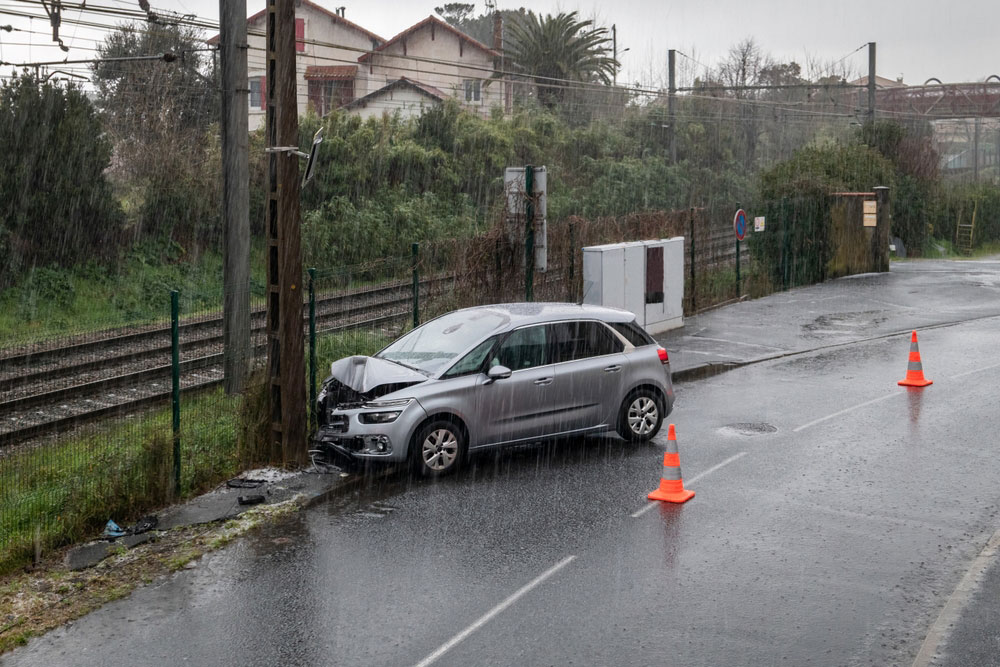
Weather and road conditions play a major role in many crashes, but they do not automatically excuse a driver from responsibility. Rain, fog, standing water, worn tires, slippery roads, missing warning signs, potholes, and poor visibility can all contribute to a collision. After a crash, many people assume that “the weather caused it,” but in most cases, that is only part of the story. The real legal question is whether a driver, property owner, government agency, or another party failed to act reasonably under the conditions.
For injured victims, this issue matters because insurance companies often try to use bad weather as a shield. They may argue that the crash was unavoidable, that no one is truly at fault, or that the injured person should accept less compensation because conditions were dangerous for everyone. That is exactly why liability in these cases must be examined carefully. In many situations, dangerous weather does not remove responsibility. Instead, it raises the standard of caution that drivers are expected to follow.
At AK Injury Law Firm, we understand how insurance companies approach these cases because our founder, Dr. Azadeh Keshavarz, saw firsthand how accident victims were treated before becoming an attorney. As a former doctor of chiropractic, she witnessed the physical pain, financial stress, and unfair tactics that often follow a collision. That background helps shape the firm’s approach today. AK Injury Law Firm is a female-owned personal injury firm known for being strategic, smart, and relentless in fighting for injured clients. Our approach is captured in our slogan: Outthink, Outfight, Outwin.
Why Weather Does Not Automatically Remove Liability
One of the biggest misunderstandings in accident law is the idea that bad weather makes a crash nobody’s fault. That is not how liability usually works. Drivers have a legal duty to operate their vehicles safely based on current conditions, not based on ideal conditions. If it is raining heavily, drivers are expected to slow down. If fog reduces visibility, drivers are expected to increase following distance and use proper lights. If roads are icy or slick, they are expected to take extra precautions.
In other words, weather is not usually treated as a free pass. It is treated as a condition that demands more careful driving. A driver who travels too fast for wet pavement, follows too closely in dense fog, or fails to maintain their vehicle for seasonal hazards may still be held liable for the harm they cause.
This principle is important because insurance carriers often try to frame bad weather as an “act of nature” instead of focusing on the choices drivers made. However, liability often comes down to whether someone responded reasonably to the known risk.
How Drivers Are Expected to Adjust to Road Conditions
Every driver has a duty to use reasonable care. That duty changes with the environment. A speed that may be safe on a dry, sunny day can become dangerous during a storm. A normal following distance may become insufficient when roads are slick or visibility is low. Safe driving is always tied to the surrounding circumstances.
Examples of adjustments drivers are expected to make include:
- Reducing speed during rain, fog, high winds, or low visibility
- Increasing following distance when stopping distances are longer
- Using headlights appropriately when visibility drops
- Keeping tires, brakes, and windshield wipers in safe condition
- Avoiding sudden lane changes or aggressive braking on slick roads
- Recognizing when conditions are severe enough to delay or avoid travel
When a driver ignores these precautions and causes a collision, weather may be part of the explanation, but it does not erase negligence. In fact, it may highlight it.
Common Weather Conditions That Affect Car Accident Liability
Rain and Wet Roads
Rain is one of the most common weather-related factors in collisions. Wet roads reduce traction, increase stopping distances, and make hydroplaning more likely. But these risks are widely known, which means drivers are expected to account for them. A driver who speeds through a rainstorm, brakes too late, or loses control because they were driving aggressively may still be clearly at fault.
Rain also affects visibility. When drivers fail to turn on headlights, keep worn windshield wipers, or continue driving too fast despite poor visibility, those choices may support a liability claim. Insurance companies sometimes try to blame the rain alone, but the rain is usually only one part of the chain of events.
Fog and Low Visibility
Fog creates dangerous driving conditions because it limits the ability to see other vehicles, road hazards, pedestrians, and traffic signals. In fog-related crashes, liability often depends on whether a driver took reasonable steps to compensate for reduced visibility. That includes slowing down, using headlights correctly, and avoiding risky maneuvers.
Drivers who continue at highway speed in thick fog may be acting negligently, even if they claim they did not see the vehicle ahead. The question becomes whether they should have been driving that way at all under the circumstances.
Wind and Debris
High winds can affect vehicle control, especially for trucks, SUVs, motorcycles, and vehicles pulling trailers. Wind can also blow debris into the roadway, creating sudden hazards. Liability in these cases may depend on the facts. If a driver loses control because they were traveling too fast for gusty conditions, they may still bear responsibility. If cargo was improperly secured and flew into traffic, the person or company responsible for securing that load may be liable.
Standing Water and Flooded Roads
Standing water can hide potholes, reduce tire traction, and cause hydroplaning. Flooded roads can also create serious hazards for drivers who misjudge depth or try to pass through areas that are clearly unsafe. Liability may depend on whether the driver acted recklessly, whether the roadway was improperly maintained, or whether warnings were missing.
In some cases, a city or other agency may share fault if dangerous drainage issues were known but not addressed. In others, the driver may be liable for failing to slow down or attempting an obviously unsafe maneuver.
How Road Conditions Affect Liability
Not every crash caused by poor road conditions is solely about driver negligence. Sometimes the roadway itself is part of the problem. Unsafe road design, missing signage, potholes, damaged pavement, malfunctioning traffic signals, or lack of proper drainage can all contribute to serious collisions.
When road conditions are a factor, liability may extend beyond the drivers involved. Depending on the case, responsibility may involve a government entity, contractor, construction company, or property owner. These cases are often more complex because they may require proof that the dangerous condition existed long enough for the responsible party to know about it and fix it, or that the hazard was created by negligent work.
Examples of road condition issues that can affect liability include:
- Potholes or uneven pavement that cause a driver to lose control
- Missing guardrails or warning signs near dangerous curves
- Poor drainage that leads to recurring flooding or standing water
- Construction zones with inadequate barriers or unclear lane markings
- Broken traffic signals or obstructed traffic signs
- Road debris left behind by maintenance crews or commercial vehicles
These cases often require investigation beyond the basic police report. Photos, maintenance records, prior complaints, roadway design documents, and expert analysis may all become important.
Can More Than One Party Be Liable?
Yes. Many weather and road condition cases involve shared fault. For example, one driver may have been speeding on a wet road while another driver had bald tires. Or a driver may have lost control because of both rain and a dangerous pothole that had been ignored for months. Liability is not always an all-or-nothing issue.
That is why a detailed legal analysis matters. More than one party may have contributed to the crash, and identifying all responsible parties can be critical for maximizing recovery. Insurance companies prefer simple stories, especially stories that reduce payouts. Real accident cases are often more layered than that.
How Insurance Companies Use Weather Against Injury Victims
Insurance companies know that weather creates uncertainty, and they often use that uncertainty to protect themselves. Instead of focusing on whether the other driver acted reasonably, they may argue that the crash was simply unfortunate, unavoidable, or caused by nature. This can be a powerful tactic because many injured people are already overwhelmed and may assume the insurer is right.
Common arguments insurance companies make include:
- The crash happened because of rain or fog, not because of driver negligence
- Everyone on the road accepted the same weather risk
- The injured driver was partially or fully responsible for driving in those conditions
- Visibility was too poor for anyone to avoid the crash
- The road condition was sudden and unforeseeable
These arguments are not always accurate. They are often designed to create doubt, reduce settlement value, or shift blame. A strategic attorney can challenge these claims by focusing on what the evidence actually shows. That may include vehicle speed, braking patterns, witness statements, road design, maintenance history, traffic camera footage, and weather reports tied to the exact time and place of the crash.
Evidence That Can Help Prove Liability
Because weather-related cases can become fact-heavy, evidence is especially important. The stronger the evidence, the harder it becomes for an insurer to blame the weather alone.
Useful evidence may include:
- Police reports and officer observations about road and weather conditions
- Photographs of vehicle damage, skid marks, flooding, potholes, or debris
- Dashcam footage or nearby surveillance video
- Witness statements about speed, visibility, and driver behavior
- Vehicle maintenance records showing tire or brake condition
- Cell phone records if distraction is suspected
- Accident reconstruction analysis
- Weather data matching the exact crash time and location
- Road maintenance logs, prior complaints, or construction records
In some cases, what appears at first to be a “weather accident” turns out to be a clear case of negligence once the evidence is gathered and analyzed properly.
Why Comparative Fault May Come Up
In many car accident claims, the defense may try to argue that the injured person was also partly responsible. This is especially common in bad weather cases. For example, the other side may say that both drivers were going too fast for the conditions, or that the injured driver should have reacted sooner.
That does not mean the claim is lost. It simply means liability may be disputed. Even when multiple factors are involved, an injured person may still be entitled to significant compensation. The key is to avoid letting the insurance company control the narrative. A strategic approach can help separate real facts from self-serving assumptions.
What to Do After a Crash Involving Bad Weather or Unsafe Roads
The steps you take after the collision can make a major difference in your case. Weather conditions change quickly. Water drains away. Fog lifts. Debris gets cleared. Evidence can disappear faster than people realize.
Important steps include:
- Call the police and make sure an official report is created
- Take photographs of the vehicles, the roadway, the weather, and any visible hazards
- Get contact information from witnesses
- Seek medical attention right away, even if symptoms seem minor at first
- Do not admit fault or speculate about what caused the crash
- Preserve shoes, clothing, dashcam footage, and any related evidence
- Speak with an attorney before giving detailed statements to insurance companies
Even a seemingly simple crash can become complicated once insurance adjusters start asking questions. The earlier the case is investigated, the better the chance of preserving evidence that supports liability.
Why Legal Strategy Matters in These Cases
Weather and road condition cases are rarely straightforward. They often involve overlapping causes, disputed facts, and aggressive insurance defenses. That is exactly why legal strategy matters. It is not enough to say that the other driver caused the crash. The case must be built carefully, with the right evidence, the right theory of liability, and the right response to every defense raised.
This is where experience and strategic thinking become especially important. A lawyer must know how to show that weather did not “cause” the crash in a legal sense by itself. The focus should be on the human choices, mechanical failures, maintenance issues, roadway hazards, and preventable actions that turned bad conditions into a serious injury event.
That kind of approach can make the difference between a denied claim, a low settlement, and a strong recovery.
How We Can Help
At AK Injury Law Firm, we understand that weather and road condition cases require more than a basic claim. They require smart, strategic advocacy. Our founder, Dr. Azadeh Keshavarz, built this female-owned personal injury firm after seeing how unfairly accident victims were often treated. That experience still drives how we handle every case today. We know insurance companies try to use confusion, blame-shifting, and uncertainty to pay less. Our job is to cut through that. We investigate the facts, identify the real sources of liability, and fight in a calculated, intelligent way designed to win big against insurance companies. That is what Outthink, Outfight, Outwin means in practice. If you were hurt in a crash involving rain, fog, dangerous roads, poor visibility, or another weather-related hazard, AK Injury Law Firm is ready to help you protect your rights and pursue the compensation you deserve.