
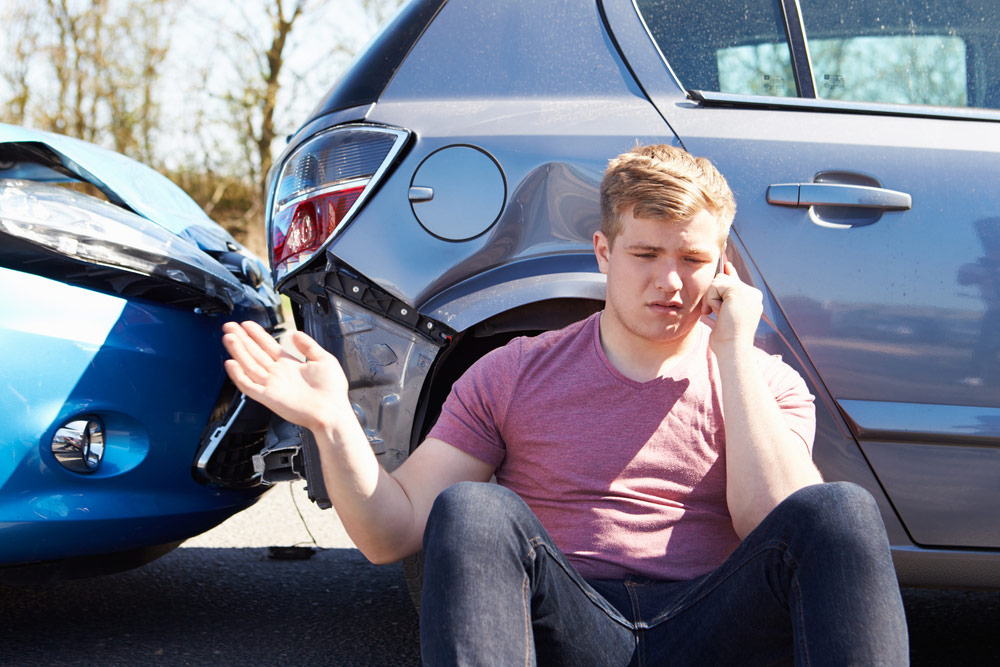
You did everything you were supposed to do. You carried insurance, followed the rules of the road, and expected other California drivers to do the same. Then someone causes a crash, you are injured, your vehicle is damaged, and you discover the driver responsible has no insurance.
For many accident victims, that discovery creates an immediate fear: Who is going to pay for all of this?
An uninsured at-fault driver can make a California car accident claim more complicated, but it does not automatically mean you have no way to recover compensation. Depending on your insurance policy, the circumstances of the collision, who owned the other vehicle, whether the driver was working at the time, and other factors, there may be several potential sources of recovery.
The important thing is not to assume that an uninsured driver means an uncompensated accident. These cases require a closer examination of every available insurance policy and every potentially responsible party.
California Drivers Are Required to Carry Liability Insurance
California requires drivers to demonstrate financial responsibility, and most people satisfy that requirement by purchasing automobile liability insurance. As of 2026, California's minimum liability insurance requirements for most private passenger vehicles are:
- $30,000 for injury or death to one person;
- $60,000 for injury or death to more than one person in a single accident; and
- $15,000 for property damage.
These are minimum amounts, not necessarily enough insurance to cover the consequences of a serious collision. More importantly, some drivers continue to operate vehicles without valid insurance despite the legal requirement.
A driver may have allowed a policy to lapse, failed to pay premiums, been excluded from a policy, provided outdated insurance information, or simply never purchased coverage. In other situations, an insurer may dispute whether its policy applies to the crash.
That is why one of the first steps after discovering a possible insurance problem is determining whether the other driver is actually uninsured.
Being Uninsured Does Not Eliminate the Other Driver's Liability
Insurance and legal responsibility are two different issues.
If another driver's negligence caused your collision, that person does not escape responsibility simply because he or she failed to purchase insurance. The driver may still be legally responsible for the damages caused by the crash.
Depending on the facts, recoverable damages may include compensation for:
- Emergency room and hospital expenses;
- Chiropractic care, physical therapy, rehabilitation, and other treatment;
- Future medical care;
- Lost wages;
- Reduced future earning ability;
- Pain and suffering;
- Vehicle repairs or total-loss damages;
- Other property damage; and
- Other losses legally connected to the accident.
The practical problem is collecting those damages. Insurance normally provides the financial resources behind a claim. When there is no liability policy, the next question becomes where else compensation may come from.
Your Own Uninsured Motorist Coverage May Become Extremely Important
For many California accident victims, uninsured motorist coverage is the most important source of compensation after being hit by an uninsured driver.
Uninsured motorist coverage, commonly called UM coverage, is designed for exactly this situation. California automobile insurers are generally required to offer uninsured motorist coverage when issuing qualifying liability policies. A policyholder can reject uninsured motorist coverage, but the rejection generally must be made in writing.
If you purchased uninsured motorist bodily injury coverage, you may be able to bring a claim against your own insurance company for injuries caused by an uninsured at-fault driver.
That can feel unusual. You may have been a loyal customer of your insurance company for years, and now you are essentially making an injury claim under your own policy. However, you are using coverage that you purchased for this purpose.
What Can an Uninsured Motorist Bodily Injury Claim Cover?
An uninsured motorist bodily injury claim can potentially compensate you for many of the same categories of injury-related damages you would have pursued from the at-fault driver's liability insurer.
Depending on the circumstances and policy limits, those damages may include medical expenses, lost income, future treatment, diminished earning capacity, and noneconomic damages such as physical pain and the effect the injury has had on your daily life.
Your insurance company does not simply issue a check because you have UM coverage. You generally still need to prove that the other driver was responsible for the accident, establish the nature and extent of your injuries, document your financial losses, and prove the value of the claim.
This is where uninsured motorist cases can become surprisingly adversarial.
Your insurer may question whether the other driver was completely responsible. It may challenge whether particular treatment was necessary, whether an injury was caused by the collision, or what the claim is worth.
The fact that you are dealing with your own insurance carrier does not mean you should stop documenting the case carefully.
Uninsured Motorist Coverage and Underinsured Motorist Coverage Are Different
The terms uninsured and underinsured are often used together, but they address different situations.
An uninsured driver generally has no applicable liability insurance for the accident. An underinsured driver has insurance, but the available liability limits may be insufficient compared with the injured person's damages and applicable uninsured/underinsured motorist coverage.
Imagine, for example, that someone suffers substantial injuries in a serious crash and the at-fault driver carries only California's minimum bodily injury limits. Even though that driver technically has insurance, those limits could be far below the victim's total damages.
Underinsured motorist coverage can become relevant after applicable liability coverage has been exhausted, subject to California law and the specific insurance policy.
What About Damage to Your Car?
Bodily injury and property damage are often handled through different portions of an automobile policy.
California insurers may offer uninsured motorist property damage coverage, commonly called UMPD. California's standard uninsured motorist property damage protection is limited, with the California Department of Insurance identifying a $3,500 UMPD limit.
Whether UMPD applies can depend on your policy, whether the uninsured driver can be identified, and whether you carry collision coverage.
If you have collision coverage, you may instead be able to use that coverage to repair or replace your vehicle, subject to the terms of your policy and your deductible. Some policies also include a collision deductible waiver that can become important when an identified uninsured driver causes the accident.
Do not assume the same coverage pays both your medical claim and your vehicle claim. Have the entire policy reviewed, including declarations pages, endorsements, deductibles, exclusions, and optional coverages.
Medical Payments Coverage May Provide Another Source of Assistance
Some California auto policies include Medical Payments coverage, often called MedPay.
MedPay can pay certain accident-related medical expenses up to the purchased limit regardless of who caused the collision. Because it is not dependent on establishing the other driver's liability in the same way as a bodily injury claim, it can sometimes provide an earlier source of funds for medical expenses.
The availability and amount of MedPay varies from policy to policy, so it is important to determine whether you purchased it rather than assuming that it is automatically included.
Can You Sue the Uninsured Driver Personally?
Yes. An uninsured driver can still be sued for damages caused by negligence.
Whether doing so makes financial sense is another question.
A judgment against someone does not guarantee that the money will actually be collected. Some uninsured drivers have limited income and few assets. Others may have wages, real estate, businesses, investments, or other assets that could potentially matter to collection.
A serious accident involving major injuries may justify investigating the driver's financial circumstances rather than automatically assuming the person has nothing simply because he or she did not have automobile insurance.
A strategic legal evaluation looks at both liability and collectability. Winning a judgment on paper is not the same as recovering money for the client.
The Driver May Not Be the Only Responsible Party
One of the biggest mistakes in an uninsured motorist accident is focusing only on the person who was behind the wheel.
California law can create potential responsibility for other parties under certain circumstances. For example, the person driving may not have owned the vehicle. A vehicle owner who gave someone permission to use the vehicle may have legal exposure under California law, although special statutory rules and limits can apply.
An employer may also become important if the driver was performing work-related duties when the collision occurred. Commercial vehicle accidents can involve businesses, contractors, vehicle owners, leasing companies, and additional insurance policies.
Other cases may involve:
- A company whose employee caused the crash while working;
- A separate owner of the vehicle;
- A rideshare or delivery platform, depending on the driver's activity and applicable coverage;
- A business responsible for negligent vehicle maintenance;
- A manufacturer or other party when a vehicle defect contributed to the collision; or
- A public entity in cases involving potentially dangerous roadway conditions, subject to special California claim requirements.
These theories do not apply to every accident. The point is that an uninsured driver should trigger a broader investigation, not an immediate decision that there is no case.
Do Not Assume Your Own Insurance Company Will Automatically Protect Your Interests
People are often uncomfortable pursuing an uninsured motorist claim because they have a good relationship with their insurance carrier.
Your insurer may have provided excellent customer service for years. But once a substantial UM claim is made, the company still has a financial interest in determining how much it must pay under the policy.
The claim therefore needs to be approached with evidence.
Medical records should accurately document your injuries. Lost wages should be supported by employment or financial records. Future medical needs may require medical opinions. The circumstances of the collision should be supported by photographs, witness statements, video, police information, vehicle damage, and other available evidence.
Strong claims are not built around assumptions. They are built around documentation.
What Should You Do Immediately After an Accident With an Uninsured Driver?
If you discover at the scene that the other driver does not have insurance, do not allow that fact to distract you from the basic steps needed to protect yourself.
- Contact law enforcement when appropriate. A police report can help establish identities, statements, vehicle information, and other facts.
- Exchange information. Obtain the driver's name, address, driver's license information, license plate, vehicle owner information, and any insurance information the person provides.
- Photograph the scene. Take pictures of vehicle positions, damage, debris, roadway conditions, traffic controls, and visible injuries when possible.
- Get witness information. Independent witnesses can become especially important when liability is disputed.
- Seek appropriate medical attention. Do not allow uncertainty about insurance to prevent you from addressing an injury.
- Notify your insurer. Your policy may contain notice requirements that affect uninsured motorist, collision, MedPay, or other coverage.
- Preserve documents. Keep bills, medical records, receipts, employment records, photographs, correspondence, and insurance documents.
- Do not rush into recorded statements or settlements. Understand what is being requested and which coverage is involved before making significant decisions.
California's SR-1 Reporting Requirement Still Applies
A driver's lack of insurance does not eliminate your own reporting responsibilities.
California requires drivers involved in qualifying collisions to report the accident to the Department of Motor Vehicles using an SR-1. The report generally must be submitted within 10 days when someone is injured or killed, even if an injury seems minor, or when property damage exceeds $1,000.
The SR-1 requirement applies regardless of who caused the collision and is separate from reports made to police, the California Highway Patrol, or an insurance company.
For drivers involved in collisions in San Diego, handling these administrative requirements correctly is part of protecting the larger claim.
Hit-and-Run Accidents Can Create Additional Complications
A hit-and-run accident presents a different version of the uninsured motorist problem because you may not know who caused the collision.
California uninsured motorist law contains specific requirements for claims involving an unknown driver, including rules relating to physical contact and prompt reporting. California Insurance Code Section 11580.2 includes a 24-hour law-enforcement reporting requirement and a requirement for a sworn statement to the insurer within 30 days in certain unknown-driver uninsured motorist claims.
Because these deadlines can arise much sooner than the ordinary deadline for a personal injury lawsuit, hit-and-run victims should not assume they can deal with the insurance issues months later.
There Are Deadlines Even When the Other Driver Has No Insurance
The absence of insurance does not stop California's legal deadlines from running.
California generally provides two years to bring a lawsuit for personal injuries caused by another person's wrongful act or negligence. Property damage claims can be governed by a different limitation period.
Uninsured motorist claims also have their own procedural rules. California Insurance Code Section 11580.2 generally requires certain action within two years of the accident to preserve an uninsured motorist bodily injury claim. Depending on the circumstances, this may involve filing suit against the uninsured driver, reaching an agreement concerning the amount due, or formally instituting arbitration against the insurer.
Claims involving government entities can have substantially shorter administrative deadlines. Under current California law, certain claims involving injury to a person or personal property generally must be presented to the public entity within six months of accrual.
These are exactly the kinds of deadlines that make waiting dangerous. Which deadline applies depends on the facts, the parties involved, and the insurance coverage.
Why Strategy Matters More in an Uninsured Driver Case
An ordinary liability claim may have a relatively obvious starting point: identify the at-fault driver's insurer and pursue the claim.
An uninsured motorist case requires more layers of investigation.
A lawyer may need to determine whether the driver truly had no coverage, examine the client's own insurance policy, identify every applicable vehicle and policy, investigate the vehicle owner, determine whether the driver was working, evaluate potential third-party defendants, preserve UM rights, document damages, and consider whether pursuing the uninsured driver's personal assets is worthwhile.
The value of legal representation in this situation is not simply fighting harder. It is knowing where to look.
A successful strategy can involve identifying coverage or liability that was not obvious at the beginning of the case. It can also mean avoiding wasted effort against a source that is unlikely to produce meaningful recovery.
Do Not Let the Words "No Insurance" End the Investigation
Hearing that the at-fault driver is uninsured is discouraging, particularly when you are already dealing with pain, medical appointments, missed work, transportation problems, and an insurance process you did not ask to be part of.
But "the driver has no insurance" is a fact that changes the strategy. It is not necessarily the end of the claim.
Your own uninsured motorist coverage may apply. Collision or MedPay coverage may help with certain losses. Another person or business may share legal responsibility. The vehicle may have a separate owner. The driver may have been working. There may be other applicable insurance. In some situations, pursuing the driver's personal assets may also be appropriate.
The right approach is to investigate first and make decisions after the full financial and legal picture is known.
How we can help
AK Injury Law Firm is a female-owned personal injury firm founded by Dr. Azadeh Keshavarz. Before becoming a personal injury attorney, Dr. Keshavarz worked as a Doctor of Chiropractic and saw firsthand what accident patients face after a collision, including the way insurance companies evaluate and challenge injury claims. That experience influences how we approach car accident cases today. We do not believe effective representation means fighting without a plan. We investigate the accident, analyze every potential source of insurance and liability, document the medical and financial impact of the injuries, and build a strategy around the facts of the individual case. When an uninsured driver causes a serious accident, we can help determine where compensation may still be available and pursue it intelligently and aggressively. Our approach is simple: Outthink. Outfight. Outwin.
- California Insurance Code section 11580.2 (uninsured motorist coverage)
- California Vehicle Code section 16000 (DMV SR-1 accident report)
Related: San Diego uninsured motorist lawyer · San Diego car accident lawyer. Need help with your own case? Request a free case review.