
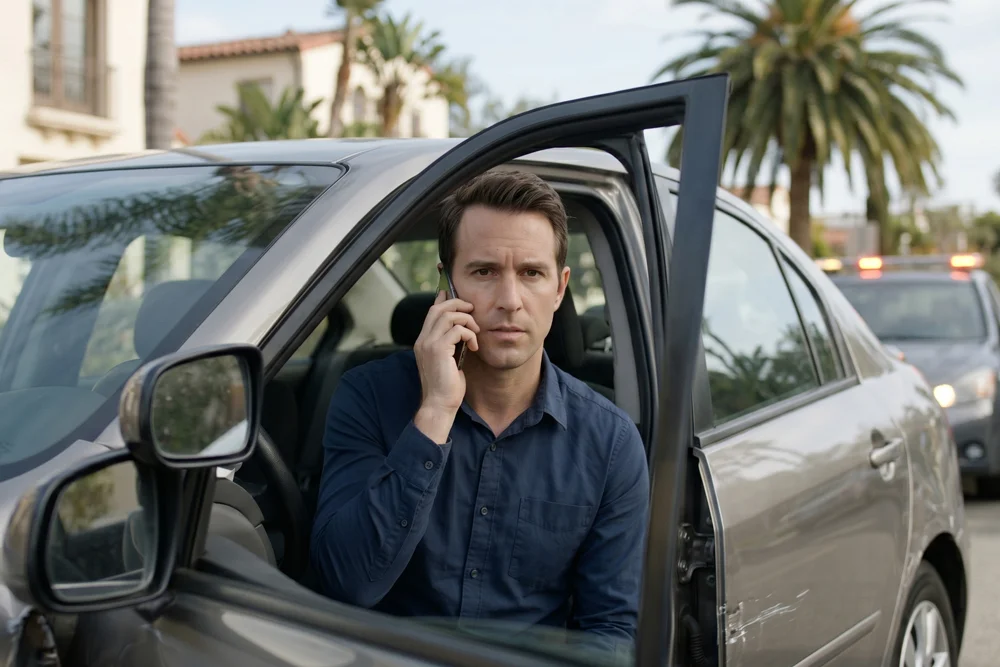
The phone call usually sounds harmless at first. An insurance adjuster from the other driver’s company says they only need “your side of the story,” a “quick statement,” or a few details to “move the claim forward.” After a car accident, that may sound reasonable. You want your car fixed, your medical bills handled, and the stress to end.
But before you answer questions, agree to a recorded statement, or accept an early settlement, it is important to understand one thing: the other driver’s insurance company does not represent you. Their job is to protect their insured driver and limit how much the company pays. Even a polite adjuster may be looking for statements that can reduce, delay, or deny your claim.
At AK Injury Law Firm, a female owned personal injury law firm in San Diego, we help injured people deal with insurance companies from a position of strategy, not fear. Founder and main attorney Dr. Azadeh Keshavarz brings a unique perspective to car accident cases. Before becoming a personal injury lawyer, she was a doctor of chiropractic and saw how accident patients were often treated by insurance companies. That experience shaped her mission: fight for injured clients with intelligence, preparation, and pressure. Her slogan says it clearly: Outthink, Outfight, Outwin.
Should You Speak With the Other Driver’s Insurance Company?
In many car accident cases, you should be extremely careful before speaking with the other driver’s insurance company. You may need to provide basic information at some point, but you should not give detailed statements about fault, injuries, pain levels, treatment, speed, distance, or what you “think” happened without understanding how those words may be used later.
Insurance adjusters are trained to evaluate risk. They listen for anything that can weaken your claim. A simple phrase like “I’m okay” may be used to argue that you were not seriously injured. Saying “I didn’t see the other car until the last second” may be twisted into an argument that you were not paying attention. Guessing about speed or distance may create inconsistencies if later evidence says something different.
That does not mean every adjuster is rude or dishonest. Many are professional. The problem is that their professional goal is not the same as yours. You want fair compensation. The other driver’s insurer wants to pay as little as it can reasonably justify.
Why the Other Driver’s Insurance Company Wants to Talk to You
After a crash, the other driver’s insurer may contact you quickly. Sometimes this happens before you have a full diagnosis, before your pain has fully developed, before you know whether you will miss work, and before you understand the value of your claim.
The insurance company may want to:
- Get a recorded statement before you speak with a lawyer.
- Lock you into a version of events while your memory is still incomplete.
- Find statements that suggest shared fault.
- Minimize your injuries by asking how you feel too early.
- Push a fast settlement before the full cost of your injuries is known.
- Collect information that helps the company defend its insured driver.
A fast phone call may feel like customer service, but it can also be part of a claims strategy. That is why your response should be careful, calm, and limited.
What Can Go Wrong During the Call?
Many accident victims do not realize how easily innocent answers can be used against them. Insurance companies often compare every statement you make against police reports, medical records, photos, witness statements, vehicle damage, and later testimony. If something does not match perfectly, they may argue that you are unreliable.
You May Accidentally Admit Fault
After a crash, many people apologize out of habit. Saying “I’m sorry” may feel polite, but an adjuster may treat it as an admission. You might also say something like “I should have slowed down” or “I didn’t know where the other car came from.” Even when you did nothing wrong, these statements can be used to suggest partial responsibility.
California car accident claims often involve fault disputes. If the insurance company can argue that you were partly responsible, it may try to reduce the value of your claim. That is why you should avoid guessing, apologizing, or accepting blame.
You May Minimize Your Injuries Too Early
Many car accident injuries do not feel severe right away. Adrenaline can hide pain. Neck stiffness, back pain, headaches, dizziness, numbness, shoulder pain, and concussion symptoms may become worse hours or days later.
If an adjuster asks, “Are you injured?” and you answer, “I’m fine,” that statement may come back later. The insurance company may argue that your injuries must not be related to the crash because you said you were fine at the beginning.
A safer response is to avoid medical conclusions. You can say that you are still being evaluated, you are monitoring symptoms, or you are seeking medical care.
You May Guess About Facts
Adjusters may ask questions about speed, distance, timing, traffic signals, weather, road conditions, or vehicle positions. If you are not completely sure, guessing can hurt you.
For example, if you estimate that the other driver was “maybe 30 feet away,” but photos or witness statements suggest something else, the insurer may argue that your memory is unreliable. If you estimate your speed incorrectly, the company may use that answer to suggest you contributed to the crash.
The best answer is often simple: do not guess. If you do not know, say you do not know.
You May Give a Recorded Statement That Helps the Insurer
A recorded statement is not just a conversation. It is evidence. The adjuster may ask carefully worded questions designed to create helpful admissions for the insurance company.
You may be asked:
- “When did you first notice the other vehicle?”
- “Were you looking straight ahead?”
- “Did you have any prior back or neck pain?”
- “Did you tell the officer you were injured?”
- “Are you feeling better now?”
- “Is there anything you could have done to avoid the crash?”
These questions may sound ordinary, but your answers can shape the entire claim. Before giving any recorded statement to the other driver’s insurance company, it is smart to speak with a personal injury attorney.
Are You Required to Give the Other Driver’s Insurance Company a Recorded Statement?
In most cases, you are not required to give a recorded statement to the other driver’s insurance company. That company is not your insurer. You do not have the same contractual duties to cooperate with them that you may have with your own insurance company.
Your own insurance policy may require cooperation if you are making a claim under your coverage, such as uninsured motorist, underinsured motorist, medical payments, or collision coverage. Even then, you should understand your rights and obligations before giving a recorded statement.
With the other driver’s insurer, you can usually decline politely. You may say:
“I am not giving a recorded statement at this time. Please send any requests in writing.”
That type of response keeps the conversation controlled. It does not accuse anyone. It does not create unnecessary conflict. It simply protects your claim.
What Should You Say If the Adjuster Calls?
If the other driver’s insurance company contacts you, keep the conversation brief. Do not argue. Do not explain the full accident. Do not discuss injuries in detail. Do not accept blame. Do not agree to a settlement.
Information You May Confirm
Depending on the situation, you may confirm basic facts such as:
- Your name
- Your contact information
- The date and location of the accident
- The vehicles involved
- Your insurance information if necessary
- Whether you are represented by an attorney
Information You Should Avoid Discussing
You should avoid discussing details that may be used against you, including:
- Who caused the crash
- Your speed or distance estimates
- Whether you could have avoided the accident
- How badly you are injured
- Whether your pain is improving
- Prior injuries or medical conditions
- Your work limitations
- Settlement numbers
- Recorded statements
The safest approach is to keep the conversation short and move future communication to writing or through your attorney.
What If the Other Driver’s Insurance Company Offers Money Right Away?
A fast settlement offer may feel like a relief, especially if you have bills, missed work, and a damaged vehicle. But early offers are often made before the full value of the claim is known.
Once you sign a release, you generally give up the right to ask for more money later. That can be a serious problem if your injuries get worse, you need more treatment, you miss additional work, or your doctor recommends future care.
Before accepting an offer, you should understand:
- The full extent of your injuries
- Your current and future medical costs
- Whether you will need ongoing treatment
- Your lost income and future work limitations
- The value of pain and suffering
- Whether liability is being unfairly disputed
- Whether policy limits affect recovery
Insurance companies know that injured people are often under pressure. A low offer may be designed to close the claim quickly before you realize what it is truly worth.
How Insurance Companies Use Your Words Against You
A claim is built on evidence, and your words can become part of that evidence. The other driver’s insurer may review your statement line by line to find anything that helps them reduce payment.
They May Argue You Were Partly at Fault
If you say you were distracted, unsure, rushing, tired, or did not see the other driver, the insurer may argue that you share responsibility.
They May Argue Your Injuries Are Minor
If you say you are “okay,” “getting better,” or “not too bad,” the insurer may use that to minimize pain, medical treatment, and long-term effects.
They May Argue Your Injuries Were Pre-Existing
If you mention prior back pain, neck pain, headaches, or chiropractic care without context, the insurance company may argue that the crash did not cause your current condition.
They May Argue You Are Inconsistent
Memory after a crash can be imperfect. If your statement differs from later medical records, police reports, or testimony, the insurer may use that difference to attack your credibility.
Why Dr. Azadeh Keshavarz’s Background Matters in Insurance Claims
Dr. Azadeh Keshavarz understands car accident claims from a perspective many attorneys do not have. As a former doctor of chiropractic, she worked with accident patients and saw the medical side of injury recovery before building her personal injury law firm.
That matters because insurance companies often try to minimize injuries that are real but not always visible on the outside. Neck pain, back pain, soft tissue injuries, headaches, nerve symptoms, and mobility problems can disrupt every part of a person’s life. Yet insurers may call them minor, unrelated, exaggerated, or pre-existing.
Because Dr. Keshavarz has seen how accident injuries affect patients, she knows how important strong documentation can be. She understands treatment patterns, medical records, symptom progression, and the way insurance companies may try to use medical gaps or unclear records against injured people.
At AK Injury Law Firm, this background supports a strategic approach. The firm does not simply react to insurance tactics. It studies them, prepares for them, and challenges them with evidence.
What Makes AK Injury Law Firm Different?
Many law firms say they fight insurance companies. AK Injury Law Firm believes the better question is how the fight is handled. Fighting without strategy can waste time. Fighting with preparation can change the outcome.
Dr. Keshavarz built her firm around the idea that car accident victims deserve more than loud promises. They deserve smart advocacy, careful case development, and a lawyer who understands both the medical and legal pressure points of an injury claim.
The firm’s approach is reflected in three words:
- Outthink: Understand the insurance company’s tactics, weaknesses, and likely arguments before they control the claim.
- Outfight: Build strong evidence, challenge unfair positions, and apply pressure when the insurer refuses to be reasonable.
- Outwin: Pursue the best possible result through strategy, preparation, negotiation, and litigation when needed.
This is not fighting for the sake of fighting. It is focused, smart, and built to win against insurance companies that underestimate injured people.
What Should You Do After a San Diego Car Accident?
If you were hurt in a crash, your next steps can protect both your health and your claim.
- Get medical care as soon as possible. Delaying treatment can hurt your recovery and give the insurer an excuse to question your injuries.
- Report the accident. Make sure there is a record of what happened.
- Take photos and videos. Capture vehicle damage, injuries, road conditions, traffic signs, skid marks, and anything else that may matter.
- Collect witness information. Independent witnesses can help establish what happened.
- Avoid posting about the accident. Social media can be used by insurance companies.
- Do not give a recorded statement to the other driver’s insurer without legal advice.
- Do not accept a quick settlement before understanding your injuries.
- Contact a personal injury lawyer early.
What If You Already Talked to the Other Driver’s Insurance Company?
Do not panic. Many people speak with an adjuster before realizing the risks. The important thing is to stop giving additional statements and speak with a lawyer as soon as possible.
An attorney can review what was said, identify possible issues, gather stronger evidence, and help prevent the insurance company from using your words unfairly. Even if a recorded statement already happened, your case may still be strong if the evidence supports your injuries and the other driver’s fault.
The worst response is to assume the claim is ruined. The smarter response is to get strategic help quickly.
When Should You Let a Lawyer Handle the Insurance Company?
You should consider having a lawyer handle communication if:
- You were injured and need medical treatment.
- The other driver’s insurer wants a recorded statement.
- The adjuster is blaming you for the accident.
- The insurance company is delaying the claim.
- You received a low settlement offer.
- You are missing work because of your injuries.
- Your pain is getting worse.
- You are unsure what your case is worth.
- The accident involved serious damage, multiple vehicles, or disputed liability.
Once you have legal representation, the insurance company should generally communicate through your attorney. That can reduce stress, prevent mistakes, and help keep the claim focused on evidence instead of pressure.
How We Can Help
At AK Injury Law Firm, we help San Diego car accident victims deal with insurance companies the smart way. Led by Dr. Azadeh Keshavarz, a former doctor of chiropractic and the founder of a female owned personal injury law firm, our team understands how insurers try to minimize accident injuries and pressure people into saying or accepting the wrong thing. We step in to protect your claim, handle communication, build the evidence, and fight strategically for the compensation you deserve. When the other driver’s insurance company calls, you do not have to face them alone. AK Injury Law Firm is ready to help you Outthink, Outfight, Outwin.
Related: San Diego car accident lawyer · San Diego personal injury lawyer. Need help with your own case? Request a free case review.